
Sustainable Waste Handling Practices Reducing Environmental Impact Through Responsible Collection Methods

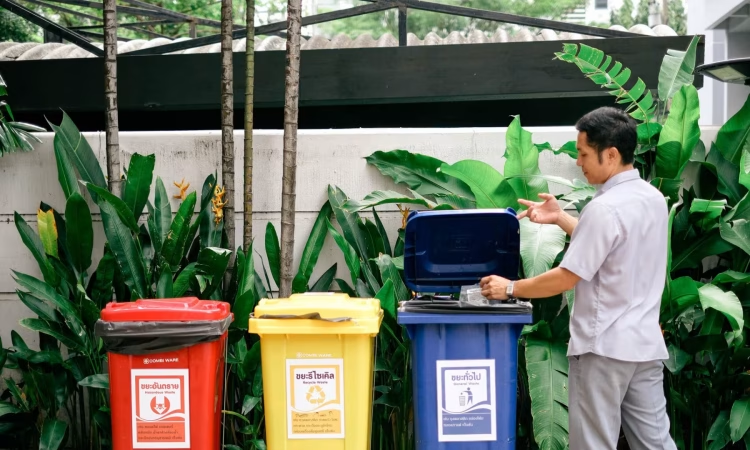
Daily surroundings change through small responsible actions. Waste habits influence air soil, and water quality silently. People notice cleaner spaces when handling improves steadily. Thoughtful disposal supports healthier living rhythms. Reliable systems guide correct choices without stress. Community routines gain strength through services such as brisbane skip bin hire, which connects daily actions to the broader purpose discussed throughout this content.
Responsible for sorting shaping, and cleaning the surroundings.
Sorting waste early reduces pressure on natural systems. Simple habits improve processing efficiency across communities.
- Correct separation prevents harmful mixing during routine disposal activities
- Early sorting supports reuse processes through cleaner material streams
- Clear labeling guides households toward responsible disposal behavior
- Consistent sorting reduces overflow issues across shared collection spaces
Sorting discipline builds cleaner environments steadily.
Collection planning improves daily efficiency
Organized schedules reduce unnecessary handling. Timely pickup supports cleaner surroundings. Predictable routines help households plan better. Efficiency improves overall outcomes.
Community participation supporting cleaner habits
Shared responsibility increases success rates. Awareness campaigns improve understanding. Group efforts reduce careless disposal. Participation strengthens accountability.
Storage practices reducing contamination risks.
Proper containment protects nearby spaces. Secure storage prevents spread issues. Clean holding areas support safer collection. Risks are reduced through mindful storage.
Transport coordination supporting reduced emissions
Efficient movement limits unnecessary fuel usage. Smart routing improves timing.
- Planned routes minimize travel distance across routine collection cycles
- Balanced loads reduce repeated trips through careful capacity management
- Coordinated timing lowers congestion during busy collection periods
- Well-maintained equipment supports smoother movement efficiency
- Route review identifies improvement points through regular assessment
- Load planning supports steady transport without overflow risks
- Timely dispatch prevents delays, causing unnecessary repeated movement
- Coordinated teams maintain smooth operations across collection schedules
Transport planning lowers environmental strain.
Material recovery strengthening reuse cycles
Recovered materials extend resource life. Reuse reduces extraction pressure. Proper recovery supports sustainable cycles. Long-term benefits grow steadily.
Education efforts guiding responsible behavior
Clear guidance shapes habits. Visual instructions reduce confusion. Ongoing learning reinforces proper actions. Awareness improves consistency.
Local service reliability enhances trust.
Dependable support builds confidence in disposal routines. Familiar services encourage correct usage. Options like brisbane skip bin hire align convenience with responsibility. Trust strengthens ongoing participation.
Monitoring methods improving accountability
Tracking volumes reveals patterns. Data supports improvement planning. Accountability reduces careless behaviour. Transparency improves outcomes.
Policy alignment supporting cleaner systems
Guidelines create uniform standards. Clear rules prevent misuse. Alignment improves cooperation. Systems operate smoothly.
Common questions answered
- Why early sorting matters? It prevents contamination quickly.
- How does planning help collection? It reduces unnecessary handling.
- Does community action improve results? Yes, shared effort increases success.
- Can monitoring improve responsibility? Tracking highlights improvement needs.
Balanced handling shaping cleaner futures
Responsible handling builds healthier surroundings through steady, mindful actions. Simple habits reduce strain on natural systems. An organized collection supports efficiency, accountability, and trust. Education guides correct behavior across communities. Reliable services encourage participation consistency. Together, these practices create lasting positive environmental change.